
Manufacturing & Converting
Precision Converting, In-House
We were founded as a converting house — slitting, spooling, die-cutting and coating are core competencies, not outsourced steps. This is why tolerances, lead times and traceability stay under one roof.
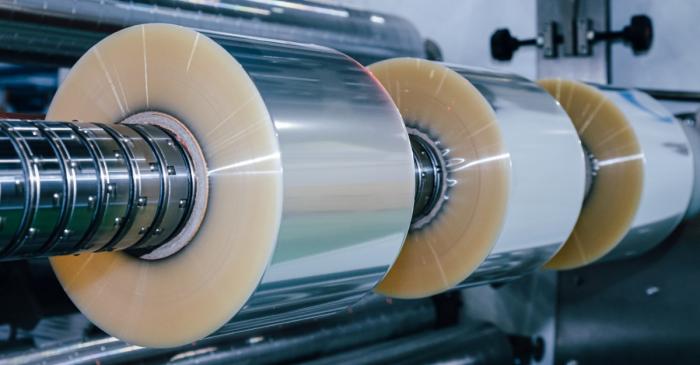
Four processes run under one roof — log slitting, level-wound spooling, rotary die-cutting and in-house coating.
- Min Slit Width
- 0.50 mm
- Max Slit Width
- 1,600.00 mm
- Tightest Tolerance
- ±0.1 mm
- Core Processes
- 4
The converting line
Everything we convert, in-house
Each process is listed with the width range and working tolerance it is quoted to. Choose a process to jump to its full specification.
Process 01
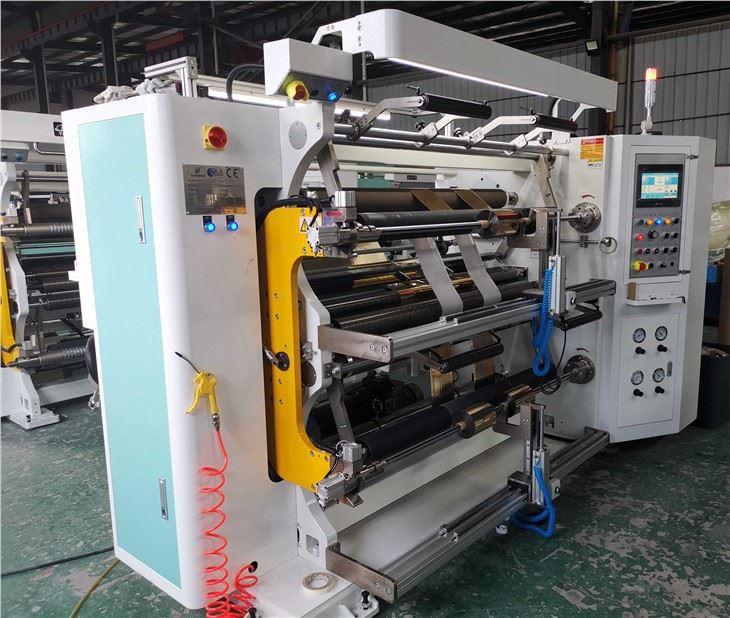
Log Slitting
Precision slit rolls from master logs with razor, shear and score blade options for all carrier films.
- Razor, shear and score blade options across all carrier films.
- Widths from 0.5 mm to 1600 mm direct from master logs.
- Lot and batch traceability follows every slit roll.
- Min width
- 0.5 mm
- Max width
- 1600 mm
- Tolerance
- ±0.1 mm
- Blade / tooling
- Razor, Shear, Score
Process 02
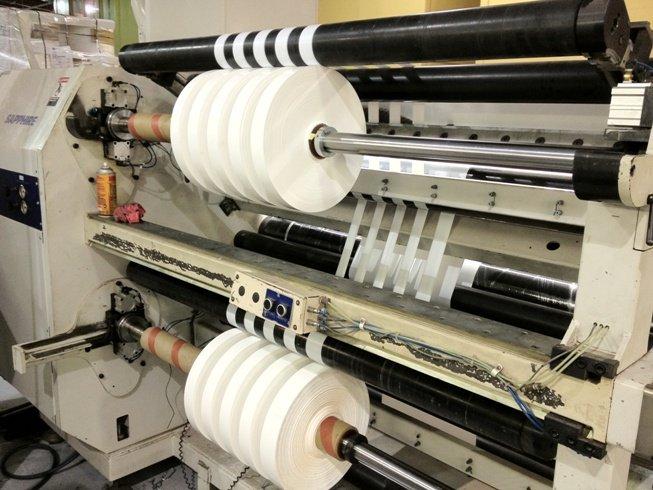
Traverse / Level-Wound Spooling
Continuous-length level-wound spools up to 1000 m per spool for automated wire harness lines.
- Continuous level-wound spools up to 1000 m per spool.
- Built for automated wire-harness lines that cannot stop for a splice.
- Wound to width rather than cut, so the process runs without a blade.
- Min width
- 3 mm
- Max width
- 410 mm
- Tolerance
- ±0.3 mm
Process 03
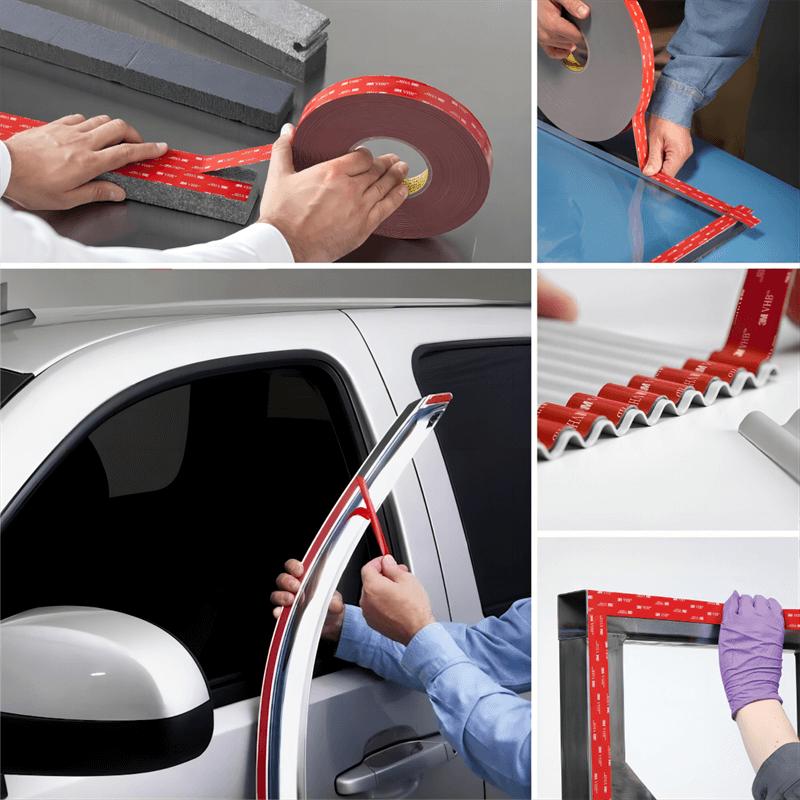
Rotary Die-Cutting
Custom shapes, gaskets and mounting pads produced with CNC rotary dies for OEM programs.
- Custom shapes, gaskets and mounting pads from master rolls.
- CNC rotary dies support OEM programs and repeatable geometry.
- Min width
- 5 mm
- Max width
- 600 mm
- Tolerance
- ±0.2 mm
- Blade / tooling
- Rotary Steel Rule
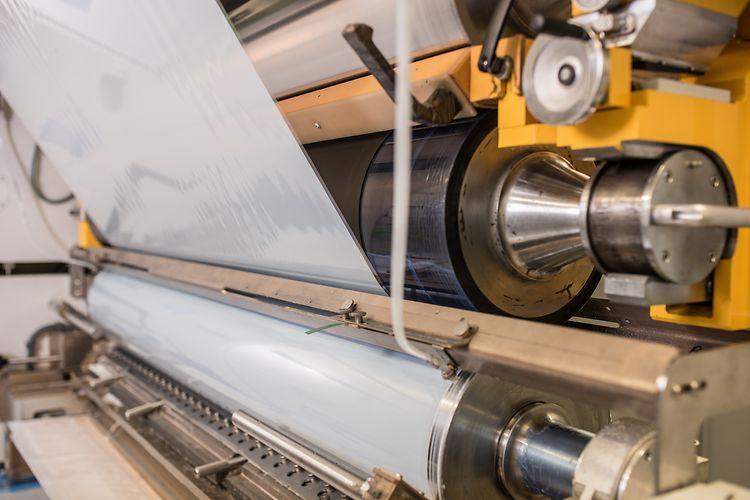
Process 04
Solvent & Hot-Melt Coating Line
In-house acrylic, silicone and rubber adhesive coating with closed-loop thickness gauging.
- In-house acrylic, silicone and rubber adhesive coating.
- Closed-loop thickness gauging holds coat weight in line.
- Coated width up to 1600 mm before conversion.
- Min width
- 15 mm
- Max width
- 1600 mm
- Tolerance
- ±0.5 mm
How a program runs
From enquiry to released rolls
OEM, private-label and toll-coating programs are quoted from your roll dimensions, core and print specifications. Volume runs from trial rolls to full truck-loads.
-
01
Share the specification
Roll width, core size, material, print requirements and the volume you are planning.
-
02
Confirm construction
The adhesive system, carrier and converting step are confirmed against the quote.
-
03
Run, inspect, document
Conversion runs with in-process checks, and the batch keeps its lot and traceability.
-
04
Ship with paperwork
TDS and SDS accompany the shipment; CoA and test documentation are issued on request.
What follows every run
The same data, three ways
The figures published on each product page are the figures used on your first trial — so what is engineered in is what is documented out.
TDS
Technical data sheet published with every product — thickness, adhesion, temperature and dielectric figures.
SDS
Safety data accompanies the shipment, with lot/batch reference kept on the roll label.
CoA
Certificates of analysis are issued on request against the batch number of the run.
Process to sector
Which industries these processes feed
The same converting line sits behind a large share of the catalog. This is directional mapping to the sectors already defined on this site — not an automated filter.
Automotive Cable Harnessing
Flame-retardant and abrasion-resistant wrapping tapes for engine-bay harnesses, battery cables and wire bundling.
Construction & HVAC
Aluminum foil and vapor barrier tapes for duct sealing, insulation facing and moisture control in HVAC systems.
Packaging & Logistics
High-tack carton sealing tapes for e-commerce, FMCG and export shipping with tamper-evident and printed options.
PCB & Electronics Assembly
Polyimide masking tapes that withstand wave soldering and conformal coating without residue or solder wicking.
FAQ
Converting & capability questions
Slitting widths, tolerances, blade life, coating grammage, tooling and lead times for the processes we run in-house.
Request a Quote01 What width range can you log slit, and how tight is the tolerance?
02 Which slitting blades do you run?
03 Do you coat in-house?
04 Can you spool or die-cut to our line format?
05 Can you toll-coat or run private-label programmes?
06 What documentation ships with a job?
Need a custom converting program?
OEM, private-label and toll-coating programs are quoted from your roll dimensions, core and print specifications. Volume from trial rolls to full truck-loads.
Specify the four — material, width, core, print — and the quote is a day away.